 Sarra
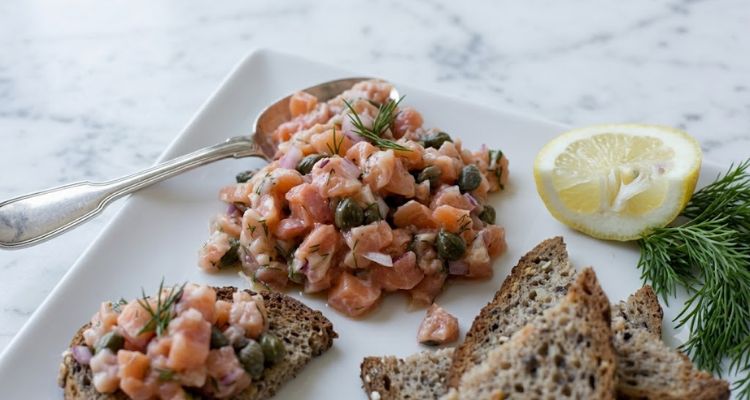
Sarra Ina Garten’s salmon tartare recipe combines diced fresh salmon and smoked salmon with lime juice, shallots, dill, capers, and two mustards. You mix everything, then chill it for a few hours so the flavors blend. It serves six as a first course on toasted seven-grain bread.
This recipe is from Ina’s Barefoot Contessa How Easy Is That (2010). Most salmon tartares use only fresh fish, but Ina mixes in smoked salmon too, for what she calls “the best of both worlds.” The fresh salmon brings a clean, briny taste while the smoked adds a deeper, earthy note.
There is no heat in this recipe, so the lime juice does the cooking. As the diced salmon marinates for a few hours, the acid gently firms it and takes off the raw edge. Skip that chilling time and the tartare tastes flat and loose, with the flavors never coming together.
Ina Garten Salmon Tartare Recipe
Course: AppetizersCuisine: AmericanDifficulty: Easy, Medium6
servings20
minutes250
kcalAn elegant make-ahead first course you mix in advance and chill until guests arrive. Serve it mounded on toasted bread, or spoon it onto cucumber rounds for a lighter bite.
Ingredients
-
1 lb (450 g) skinless fresh salmon fillet, sushi-grade
-
1/2 lb (225 g) smoked salmon, thickly sliced
-
1/3 cup (80 ml) freshly squeezed lime juice (about 3 limes)
-
1/3 cup minced shallots (about 2 shallots)
-
2 tablespoons good olive oil
-
1/4 cup minced fresh dill
-
3 tablespoons capers, drained
-
2 tablespoons Dijon mustard
-
1 tablespoon whole-grain mustard
-
2 teaspoons kosher salt
-
1 teaspoon coarsely ground black pepper
-
1 loaf seven-grain bread, thinly sliced and toasted, for serving
Directions
-
Dice the salmon: Cut both the fresh salmon and the smoked salmon into 1/4-inch (6 mm) dice. Place them in a mixing bowl.
-
Mix the tartare: Add the lime juice, shallots, olive oil, dill, capers, both mustards, salt, and pepper. Mix well.
-
Chill: Cover with plastic wrap and refrigerate for a few hours, so the salmon marinates and the flavors blend.
- Serve: Toast the bread and taste the tartare for seasoning. Serve with triangles of toast.
Notes
- Use a good smoked salmon, since it carries a lot of the flavor. Thick-sliced smoked salmon dices better than thin, floppy slices.
Chill your knife and dice the salmon while it is cold. Firm, cold fish cuts into clean cubes, while warm fish smears.
Taste and adjust the seasoning right before serving, not just at the start. The lime and salt mellow as it sits, so it often needs a final lift.
FAQs
Is it safe to eat salmon tartare raw?
It is, as long as you use the right fish. Buy sushi-grade or sashimi-grade salmon that has been previously frozen, which kills any parasites.
Keep it very cold, make it the same day, and eat it fresh. Anyone pregnant or with a weak immune system should avoid raw fish to be safe.
Can I make salmon tartare without smoked salmon?
You can use all fresh salmon, which is how most tartares are made. It tastes cleaner and brighter, but loses the smoky depth Ina builds in.
To make up for it, add a little extra salt and a few more capers. And if it is really the smoked flavor you are after, her Smoked Salmon Spread Recipe is an easy appetizer built around it.
How far ahead can I make salmon tartare?
Make it the day you plan to serve it. A few hours in the fridge is ideal, since that is when the lime juice does its work.
I would not hold raw fish much longer than that. Past a day, the texture softens and the fish is no longer at its best.
What do you serve salmon tartare on or with?
Ina serves it on triangles of toasted seven-grain bread, which gives a sturdy, nutty base. Toasted baguette or sturdy crackers work too.
For a lighter, gluten-free option, pile it onto endive leaves, or serve small spoonfuls on blini for a party. A herby Green Goddess Dressing spooned alongside makes a nice creamy contrast.
Why is my salmon tartare mushy?
Two things usually cause it. Either the salmon was diced too small, or it sat in the lime juice too long and the acid broke it down.
Cut clean 1/4-inch cubes and stick to a few hours of marinating, not overnight. The fish should stay in distinct, tender pieces.
