 Sarra
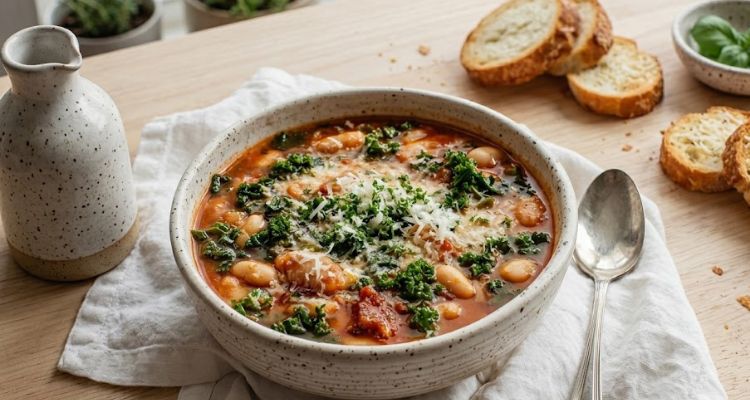
Sarra Ina Garten’s ribollita is a thick Tuscan bread soup made with dried white beans, pancetta, kale, canned plum tomatoes, sourdough bread cubes, and a base of onions, carrots, celery, and garlic. Half the beans get pureed and half stay whole, and the bread dissolves into the broth during the last 10 minutes to thicken everything. It serves 6 to 8 and takes about 2 hours, plus an overnight bean soak.
This recipe comes from Barefoot Contessa at Home, where Ina explains that “ribollita literally means ‘twice boiled’ in Italian and it’s the old-fashioned way to use up all the leftover vegetables and bread from the week.” She makes the point that every ribollita is different: “every ribollita has its own character; I’ve added some pancetta and good chicken stock to give mine lots of flavor.” It’s her take on a peasant dish, kept rustic but upgraded with real stock and cured pork.
Pureeing half the beans and leaving half whole is the technique that gives this soup its signature body. The pureed beans dissolve into the broth and thicken it naturally, like a built-in roux with no flour. The whole beans give you something to bite into. Skip the puree step and you end up with a thin broth with beans sitting at the bottom, which is a bean soup, not a ribollita.
Ina Garten Ribollita Recipe
Course: SoupsCuisine: American, ItalianDifficulty: Easy8
servings20
minutes1
hour50
minutes350
kcalA rustic Tuscan bread soup from Ina’s At Home cookbook, designed as a hearty Sunday night dinner. The sourdough bread dissolves into the broth as it simmers, and the split-bean technique gives it a creamy body without any cream at all. Ina says it’s even better the next day, so make it ahead without guilt.
Ingredients
-
1/2 lb (225g) dried white beans, such as Great Northern or cannellini
-
Kosher salt
-
1/4 cup (60ml) good olive oil, plus extra for serving
-
1/4 lb (115g) pancetta or smoked bacon, large-diced
-
2 cups chopped yellow onions (2 onions)
-
1 cup chopped carrots (3 carrots)
-
1 cup chopped celery (3 stalks)
-
3 tablespoons minced garlic (6 cloves)
-
1 teaspoon freshly ground black pepper
-
1/4 teaspoon crushed red pepper flakes
-
1 (28 oz / 794g) can Italian plum tomatoes in purée, chopped
-
4 cups coarsely chopped kale
-
4 cups coarsely chopped Savoy cabbage (optional)
-
1/2 cup chopped fresh basil leaves
-
6 cups (1.4L) chicken stock, preferably homemade
-
4 cups sourdough bread cubes, crusts removed
-
1/2 cup (50g) freshly grated Parmesan cheese, for serving
Directions
-
Soak and cook the beans: Cover the beans with cold water by 1 inch in a large bowl, cover with plastic wrap, and refrigerate overnight. Drain. Place the beans in a large pot with 8 cups of water and bring to a boil. Reduce the heat and simmer uncovered for 45 minutes. Add 1 teaspoon of salt and continue to simmer for about 15 minutes until the beans are tender. Set aside to cool in their cooking liquid.
-
Build the vegetable base: Heat the olive oil in a large stockpot over medium heat. Add the pancetta and onions and cook over medium-low heat for 7 to 10 minutes until the onions are translucent. Add the carrots, celery, garlic, 1 tablespoon salt, the black pepper, and red pepper flakes. Cook over medium-low heat for 7 to 10 minutes until the vegetables are tender.
-
Add the greens and tomatoes: Stir in the chopped tomatoes with their purée, the kale, the cabbage if using, and the basil. Cook over medium-low heat, stirring occasionally, for another 7 to 10 minutes.
-
Add the beans: Drain the beans, reserving their cooking liquid. In a food processor, puree half the beans with a little of their cooking liquid until smooth. Add the puree and the remaining whole beans to the stockpot. Measure the reserved bean cooking liquid in a large measuring cup and add enough chicken stock to make 8 cups total. Pour into the soup, bring to a boil, reduce the heat, and simmer over low heat for 20 minutes.
- Serve: Ladle into large bowls, sprinkle with Parmesan, and drizzle generously with olive oil. Serve hot.
FAQs
Why does Ina puree half the beans and leave half whole?
The pureed beans dissolve into the broth and act as a natural thickener, giving the soup a creamy body without adding any cream or flour. The whole beans give you texture and something substantial to bite into with the kale and bread.
This split technique is what separates a real ribollita from a thin vegetable soup with beans floating in it. The puree is the invisible foundation. You don’t see it, but you feel the difference in every spoonful because the broth coats the spoon instead of running off it.
Why does the bread go into the soup?
The sourdough cubes dissolve into the broth during the last 10 minutes of simmering. They break apart and thicken the soup further, adding a starchy, slightly tangy body that makes ribollita closer to a thick stew than a brothy soup.
This is the defining feature of ribollita. The name means “twice boiled” because Tuscan cooks originally made it by reboiling leftover minestrone with stale bread to stretch it into a second meal. Ina follows the same principle: the bread isn’t a garnish or a crouton. It’s a structural ingredient that changes the texture of the entire pot.
How is ribollita different from Ina’s Winter Minestrone?
Her Winter Minestrone from Foolproof is brothy and chunky with butternut squash, cannellini beans, tubetti pasta, and baby spinach, finished with pesto and white wine. It’s lighter and more modern.
This ribollita from At Home is thicker and more rustic. It uses bread instead of pasta, kale and cabbage instead of squash and spinach, and the pureed beans give it a density that minestrone doesn’t have. Ribollita is designed to get thicker and better overnight. Minestrone is best eaten fresh with the pasta and spinach added at the last minute.
Can you make ribollita ahead of time?
Ina says it plainly: “this soup is even better the next day.” The flavors meld overnight and the bread continues to absorb broth, making the texture richer and thicker. Plan to make it on Saturday and serve it on Sunday and you’ll taste the difference.
It keeps in the fridge for up to 5 days and freezes well for 3 months. The main thing to watch is thickness. It gets very dense as it sits because both the bread and the beans keep absorbing liquid. Add water or chicken stock a splash at a time when reheating until it reaches the consistency you want.
Can you use regular bread instead of sourdough?
Sourdough works best because the slight tang balances the sweetness of the onions and tomatoes, and the dense crumb holds up during 10 minutes of simmering before dissolving. Soft sandwich bread falls apart too fast and turns the soup gummy rather than thick.
Ciabatta or a rustic country bread with a firm crumb are your next best options. Cut the crusts off and tear or cut the bread into rough 1-inch cubes. Stale bread actually works better than fresh because it absorbs the broth more slowly and gives you more control over the final thickness. Don’t use baguette because the thin crumb dissolves almost instantly.
