 Sarra
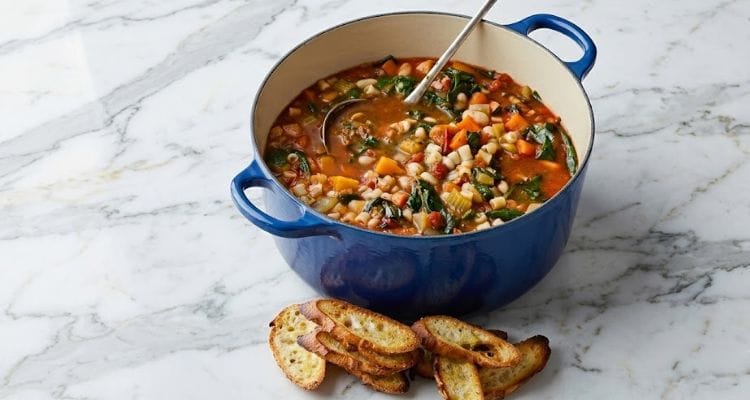
Sarra Ina Garten’s winter minestrone soup is a chunky, hearty soup packed with pancetta, butternut squash, carrots, celery, onions, chopped tomatoes, cannellini beans, tubetti pasta, and baby spinach, finished with a swirl of pesto, white wine, and Parmesan. It serves 6 to 8 and comes together in about an hour, including the garlic bruschetta that goes on top.
This recipe comes from Barefoot Contessa Foolproof, where Ina describes it as something that “falls somewhere between a soup and a stew.” The texture is the whole point: “it’s filled with chunky vegetables, pasta, beans, and spinach. Pesto and Parmesan swirled in at the end make it even better.” She serves it in big shallow bowls with a garlic bruschetta balanced on top, which turns it from a first course into a full Sunday night dinner.
The spinach goes in at the absolute last second, not during the simmer. You toss it into the hot soup with two big spoons, like tossing a salad, and cook it just until the leaves wilt. Add spinach earlier and it turns dark, slimy, and bitter after 30 minutes of simmering, which ruins the fresh green layer Ina wants on top of all those heavy winter vegetables.
Ina Garten Winter Minestrone Soup Recipe
Course: Soups, MainCuisine: American, ItalianDifficulty: Easy8
servings20
minutes45
minutes380
kcalA thick, stew-like minestrone from Ina’s Foolproof cookbook that gets its backbone from pancetta and butternut squash. The garlic bruschetta balanced on top of each bowl soaks up broth while you eat. Make it ahead, reheat, and add the spinach, pesto, and wine fresh right before serving.
Ingredients
-
Good olive oil
-
4 oz (115g) pancetta, 1/2-inch diced
-
1 1/2 cups chopped yellow onions (2 onions)
-
2 cups 1/2-inch diced carrots (3 carrots)
-
2 cups 1/2-inch diced celery (3 stalks)
-
2 1/2 cups 1/2-inch diced peeled butternut squash
-
1 1/2 tablespoons minced garlic (4 cloves)
-
2 teaspoons chopped fresh thyme leaves
-
26 oz (737g) canned or boxed chopped tomatoes (such as Pomi)
-
6 to 8 cups (1.4 to 1.9L) chicken stock, preferably homemade
-
1 bay leaf
-
1 tablespoon kosher salt
-
1 1/2 teaspoons freshly ground black pepper
-
1 (15 oz / 425g) can cannellini beans, drained and rinsed
-
2 cups cooked small pasta, such as tubetti
-
8 to 10 oz (225 to 280g) fresh baby spinach leaves
-
1/2 cup (120ml) good dry white wine
-
2 tablespoons store-bought pesto
-
Freshly grated Parmesan cheese, for serving
-
For the Garlic Bruschetta:
-
1 baguette
-
Good olive oil
-
1 garlic clove, cut in half lengthwise
Directions
-
Brown the pancetta: Heat 2 tablespoons of olive oil in a large heavy pot or Dutch oven over medium heat. Add the pancetta and cook over medium-low heat for 6 to 8 minutes, stirring occasionally, until lightly browned.
-
Sauté the vegetables: Add the onions, carrots, celery, butternut squash, garlic, and thyme. Cook over medium heat, stirring occasionally, for 8 to 10 minutes until the vegetables begin to soften.
-
Simmer the soup: Add the chopped tomatoes, 6 cups of the chicken stock, the bay leaf, salt, and pepper. Bring to a boil, then lower the heat and simmer uncovered for 30 minutes until the vegetables are tender. Discard the bay leaf.
-
Cook the pasta separately: While the soup simmers, bring a large pot of salted water to a boil. Cook 1 cup of tubetti according to the package directions, drain, and set aside. Cooking it separately keeps the soup broth from turning starchy.
-
Make the bruschetta: Preheat the oven to 425F (220C). Slice the baguette at a 45-degree angle in 1/2-inch-thick slices. Brush both sides with olive oil and bake for 6 minutes until lightly toasted. Rub the surface of each slice with the cut garlic clove.
-
Finish the soup: Add the cannellini beans and cooked pasta to the pot and heat through. The soup should be thick, but if it’s too thick, add more chicken stock. Just before serving, add the spinach and toss with two big spoons, like tossing a salad, until the leaves are just wilted. Stir in the white wine and pesto. Taste and add another teaspoon or two of salt if needed.
- Serve: Ladle into large shallow bowls, balance a garlic bruschetta on top, sprinkle with Parmesan, drizzle with olive oil, and serve hot.
FAQs
Why does Ina cook the pasta separately?
Pasta releases starch as it boils, and if you cook it directly in the soup it turns the broth cloudy, thick, and gluey. Cooking the tubetti in its own pot of salted water and adding it at the end keeps the broth clean so every other ingredient shines through.
Cooking separately also helps with leftovers. Pasta sitting in hot soup overnight absorbs the broth and bloats up, leaving you with a dry, stodgy pot the next day. If you’re planning to make this ahead, keep the cooked pasta in a separate container and add it when you reheat.
What makes this different from a regular minestrone?
Most minestrone recipes are light, brothy vegetable soups. Ina’s version is deliberately thick, almost like a stew. The pancetta gives it a rich, smoky base, and the butternut squash adds a sweetness and density you don’t find in a typical summer minestrone with zucchini and green beans.
The pesto and white wine stirred in at the end are the other difference. Traditional minestrone usually finishes with just Parmesan. The pesto adds a hit of basil and garlic that ties the winter vegetables together, and the splash of white wine brightens everything right before it hits the bowl.
Can you substitute the butternut squash?
Sweet potato works as the closest swap. It has a similar sweetness and holds its shape after 30 minutes of simmering the same way butternut squash does.
Don’t use acorn squash or delicata because they’re drier and break apart into mush during the simmer. Pumpkin is too watery and changes the consistency of the broth. The butternut squash is doing two jobs: adding sweetness and thickening the soup slightly as the edges soften, so whatever you swap in needs to hold its shape while still releasing some starch.
Can you make winter minestrone ahead of time?
Ina says you can make it ahead and reheat it before serving, but she’s specific that “it will need to be reseasoned.” The salt and pepper fade as the soup sits in the fridge, so taste it after reheating and add another teaspoon or two of salt.
Keep the spinach, pesto, and white wine out of the make-ahead batch. Those three ingredients taste best added fresh: the spinach stays bright green, the pesto keeps its punch, and the wine adds that last-second brightness. Reheat the base, then add those three right before you ladle the bowls.
What should you serve with winter minestrone?
The garlic bruschetta that comes with this recipe in Foolproof is the intended pairing, and it’s perfect. The toasted bread soaks up broth without falling apart, and rubbing it with a cut garlic clove adds flavor without the effort of making garlic bread.
This soup is hearty enough that you don’t need much else. A simple green salad rounds out the meal without competing. If you want to stretch it for a bigger group, a wedge of Parmesan and a bottle of olive oil on the table lets people finish their own bowls, which is how Ina serves it: big shallow bowl, bruschetta on top, Parmesan and oil at the table.
