 Sarra
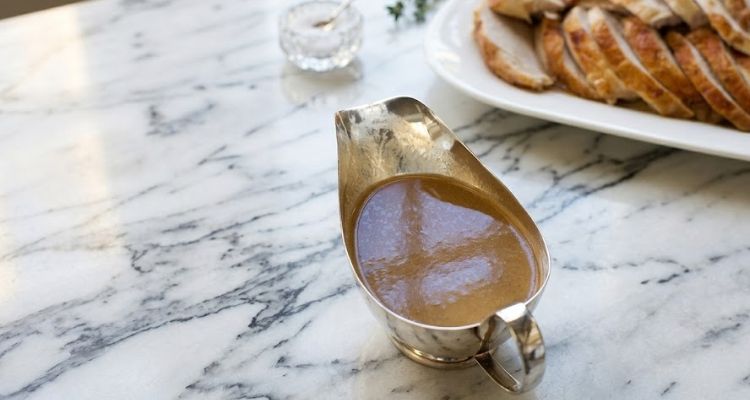
Sarra Ina Garten’s turkey gravy recipe is a smooth, make-ahead gravy built on caramelized red onions, garlic, fresh sage, and a splash of Cognac. You simmer the base days ahead, then whisk it into the turkey roasting pan with white wine to finish. One batch makes four cups, enough to cover a holiday table with some left for sandwiches the next day.
This is Ina’s Make-Ahead Turkey Gravy with Onions and Sage from her Make It Ahead (2014) cookbook. She designed it so you never panic over lumpy, last-minute gravy, promising “with this recipe, that will never happen!” The base simmers up to a week early, which is what sets it apart from standard pan gravy.
The flavor hinges on caramelizing the onions before you add anything else. You cook the red onion and garlic for 15 to 20 minutes until they brown and turn sweet, then build the roux on top. Skip that browning and the gravy comes out pale and thin-tasting, no matter how good your stock is.
Ina Garten Turkey Gravy Recipe
Course: SaucesCuisine: AmericanDifficulty: Easy4
servings10
minutes50
minutes90
kcalA holiday gravy you make almost entirely ahead, then finish in five minutes with the turkey drippings. The base freezes for three months, so you can make it long before the rush.
Ingredients
-
6 tablespoons (85 g) unsalted butter
-
1 large red onion, halved and sliced 1/4 inch (6 mm) thick
-
4 large garlic cloves, peeled and halved
-
6 tablespoons (45 g) all-purpose flour
-
4 cups (960 ml) good chicken stock, preferably homemade
-
2 tablespoons Cognac or brandy
-
10 large fresh sage leaves
-
2 bay leaves
-
2 teaspoons kosher salt
-
1 teaspoon freshly ground black pepper
-
1 cup (240 ml) dry white wine, such as Pinot Grigio
Directions
-
Caramelize the onions: Melt the butter in a large saucepan over medium heat. Add the red onion and garlic and cook, stirring often, 15 to 20 minutes, until browned and caramelized.
-
Make the roux: Sprinkle in the flour and cook, stirring constantly, for 1 1/2 minutes.
-
Simmer the base: Stir in the chicken stock, Cognac, sage, bay leaves, salt, and pepper. Bring to a boil, then lower the heat and simmer 20 minutes, stirring now and then.
-
Strain and chill: Let it sit at room temperature for 1 hour. Strain, pressing the solids lightly, then discard them. Refrigerate the base until turkey day.
-
Deglaze the pan: After roasting, move the turkey to a board to rest. Set the roasting pan over medium heat, add the white wine, and simmer 2 minutes, scraping up the browned bits.
- Finish the gravy: Slowly whisk the chilled base into the pan. Simmer about 5 minutes, until smooth and slightly thickened. Taste, then serve hot.
Notes
- Use a good chicken stock, since it carries most of the flavor before the drippings go in. Homemade is best, but a low-sodium store stock works if you watch the salt.
Cook the flour for the full 90 seconds before adding liquid. Raw flour leaves a pasty, chalky taste in the finished gravy.
Taste the base after it simmers and before you chill it. Stocks vary in saltiness, so adjust the salt to suit yours.
FAQs
Can I make this turkey gravy without pan drippings?
Yes. The base is built on chicken stock, so it already has plenty of flavor on its own.
Instead of deglazing a roasting pan, simmer the white wine in a saucepan for two minutes, then whisk in the base. You lose a little richness, but it still tastes great.
Why does Ina use red onion in her turkey gravy?
Red onions turn soft and sweet when you caramelize them, which gives the gravy a mellow, jammy base. They are gentler than the sharp bite of raw yellow onion.
You can swap in yellow onion if that is what you have. The flavor shifts slightly but the method stays the same.
How do I store and reheat leftover turkey gravy?
Finished gravy keeps in the fridge for three to four days in a sealed container. The butter and flour make it set firm once cold.
Reheat it slowly over low heat, whisking in a splash of stock or water to loosen it back to a pourable consistency.
What can I use instead of Cognac?
Brandy is the easiest swap and tastes almost identical, since Cognac is just a type of brandy. Ina lists it as an option in the recipe itself.
You can also leave it out and add a splash of dry sherry, or just more white wine, for that same warm depth.
How do I fix lumpy gravy?
Lumps usually form when the base goes into the hot pan too fast. Whisk hard and most of them break up on their own.
If a few stubborn lumps remain, pour the gravy through a fine strainer, or give it a quick buzz with an immersion blender.
