 Sarra
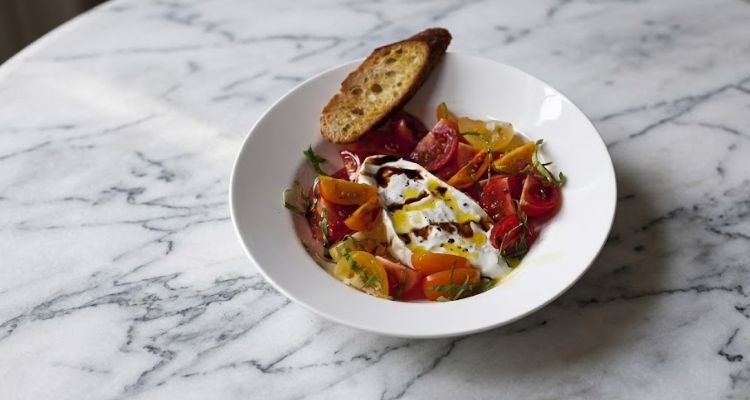
Sarra Ina Garten’s tomatoes and burrata is two balls of fresh burrata cheese halved and placed cut side down on plates, surrounded by small heirloom tomatoes, drizzled with good olive oil and aged balsamic vinegar, scattered with julienned basil, and finished with fleur de sel. It serves 4, takes about 25 minutes including the garlic toasts, and the beauty of it is that the recipe is barely a recipe at all.
This recipe comes from Ina’s Make It Ahead cookbook (2014). In the headnote, she asks the question that explains the whole dish: “Burrata is fresh Italian mozzarella with a creamy center. What else does it need besides sweet ripe tomatoes, spicy basil, and a drizzle of syrupy balsamic vinegar?” Her answer is almost nothing, just a garlicky toasted crouton on the side. The restraint is the point. Six ingredients, zero cooking, and all the work goes into sourcing the best versions of each one.
The technique that makes this dish memorable is placing each burrata half cut side down on the plate. That keeps the creamy interior sealed until the moment a diner cuts into it, and the soft center spills out onto the tomatoes, olive oil, and balsamic. It is a small detail, but it turns a simple plate of cheese and tomatoes into a moment at the table. Serve the burrata cut side up and the cream spreads before anyone sits down, and you lose that reveal entirely.
Ina Garten Tomatoes Burrata Recipe
Course: SaladsCuisine: ItalianDifficulty: Easy4
servings5
minutes25
minutes400
kcalSix ingredients, no cooking, and nothing to hide behind. Ina’s Make It Ahead recipe proves that when you start with the best burrata, ripe heirloom tomatoes, and aged balsamic, the less you do to them, the better the dish gets.
Ingredients
- For the salad:
-
2 (8 to 10 ounce / 225 to 285g) balls of fresh burrata cheese
-
16 to 20 small (2-inch diameter) heirloom tomatoes
-
Good olive oil
-
Aged balsamic vinegar
-
Kosher salt and freshly ground black pepper
-
20 fresh basil leaves, julienned
-
Fleur de sel or sea salt
- For the garlic toasts:
-
1 baguette, sliced diagonally 1/4 inch thick (20 to 25 slices)
-
Good olive oil
-
Kosher salt and freshly ground black pepper
-
1 garlic clove, halved
Directions
-
Make the garlic toasts: Preheat the oven to 400F (200C). Lay the baguette slices in a single layer on a sheet pan. Brush each with olive oil and sprinkle with salt and pepper. Bake for 15 to 20 minutes until browned and crisp. As soon as they are cool enough to handle, rub one side of each toast with the cut side of the garlic clove. Set aside at room temperature.
-
Plate the burrata: Cut each ball of burrata in half crosswise. Place one half, cut side down, on each of 4 salad plates.
-
Add the tomatoes: Cut each heirloom tomato in half through the stem end and distribute them around the burrata on each plate.
- Dress and serve: Drizzle the tomatoes and burrata generously with olive oil and aged balsamic vinegar. Sprinkle with kosher salt and pepper. Scatter the julienned basil over the top, finish with a pinch of fleur de sel, and serve immediately with the garlic toasts.
Notes
- Use aged balsamic vinegar, not the thin, sharp kind from the regular grocery aisle. Aged balsamic is thick, syrupy, and sweet. It drizzles in a ribbon and clings to the burrata instead of running off the plate.
Ina says you can make the garlic toasts up to a day ahead and store them at room temperature. Assemble the salad itself only when ready to serve.
Julienne the basil by stacking the leaves, rolling them into a tight cigar, and slicing across into thin ribbons. This prevents bruising and keeps the basil bright green on the plate.
FAQs
Why does Ina place the burrata cut side down?
Burrata has a thin mozzarella shell filled with a soft, creamy interior called stracciatella. Placing it cut side down on the plate keeps that cream contained until the diner slices into it. The moment the knife goes through, the filling spills out onto the tomatoes, olive oil, and balsamic.
That reveal is what separates this from a regular caprese salad. Serve the burrata cut side up and the cream spreads across the plate before anyone sits down. You lose the textural surprise and the dish just looks like melted cheese. Ina’s plating turns a simple ingredient into a moment at the table.
What kind of balsamic vinegar should you use?
Ina specifies “aged balsamic vinegar,” which is thick, dark, and syrupy with a natural sweetness. It drizzles in a controlled ribbon and clings to the cheese. Regular grocery store balsamic is thin, acidic, and harsh, and it pools on the plate instead of coating the ingredients.
Look for balsamic labeled “aged” or “Aceto Balsamico di Modena” that has been aged at least a few years. You do not need the most expensive bottle, but avoid anything under five dollars because it is almost certainly just wine vinegar with caramel coloring. A mid-range aged balsamic makes a noticeable difference in this dish.
Can you make this ahead of time?
Ina says to make the garlic toasts up to a day ahead, but assemble the salad only when you are ready to serve. The burrata begins to dry out and lose its creamy center once it is cut open, and the tomatoes release water that dilutes the olive oil and balsamic.
For the basil, Ina suggests washing the leaves, drying them in a salad spinner, and storing them whole in a plastic bag with a slightly damp paper towel. Julienne them right before plating so they stay bright green instead of turning black at the edges.
Does Ina have other burrata recipes?
Ina’s Burrata with Prosciutto and Figs from Cooking for Jeffrey (2016) is a richer variation. She swaps the tomatoes for torn prosciutto and fresh figs, lays them over spicy arugula, and dresses everything with a mustard vinaigrette. The burrata is plated the same way, cut side down.
Both recipes share the same philosophy: minimal ingredients, no cooking, and the burrata as the star. The tomato version is lighter and works best in high summer when heirloom tomatoes are at peak season. The prosciutto version works in early fall when figs come in. If you enjoy Ina’s minimalist composed salads, her Avocado Grapefruit Salad follows the same two-ingredient logic with even fewer components.
What should you serve tomatoes and burrata with?
Ina designed this as a first course, and it works best when followed by something with more substance: a pasta, grilled fish, or roast chicken. The light, cool salad opens the meal without filling anyone up.
For an Italian-themed dinner, set this alongside Ina’s Artichoke Salad for a two-salad antipasto spread before the main course. The roasted artichoke salad adds a warm, briny contrast to the cool, creamy burrata. Let the garlic toasts serve double duty for both dishes so the table stays simple.
