
 Sarra
Sarra Ina Garten’s summer minestrone soup is a bright, brothy vegetable soup made with zucchini, haricots verts, fresh tomatoes, cannellini beans, small pasta, leeks, and a swirl of basil pesto. It comes together in about an hour, serves 6 to 8, and works just as well at room temperature as it does hot.
Ina’s Provençal Vegetable Soup in Barefoot in Paris is the foundation here: a summer vegetable soup she first learned from Julia Child’s cookbooks in the 1970s. As Ina writes, “I add zucchini (with the haricots verts) in summer or butternut squash (with the carrots) in the winter.” Her Winter Minestrone in Foolproof adds the Italian structure: cannellini beans, small pasta, and pesto stirred in at the end. This recipe merges both approaches into one summer bowl.
The move that makes or breaks a summer minestrone is when you add each vegetable. Zucchini and green beans go in during the last 10 to 15 minutes so they stay tender with a little bite, not soft and gray. Dump them in at the beginning with the onions and you lose the fresh summer flavor that’s the whole point of the soup.
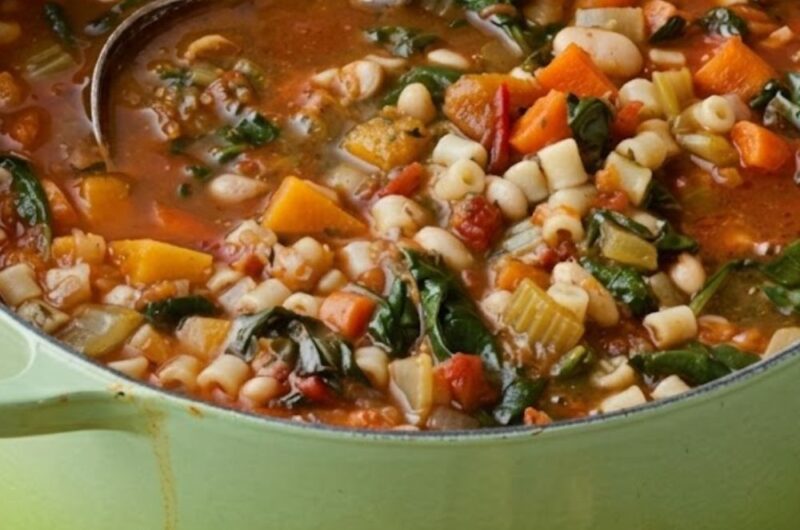
Ina Garten Summer Minestrone Soup Recipe
Course: SoupsCuisine: Italian, FrenchDifficulty: Easy8
servings20
minutes45
minutes280
kcalA garden-loaded summer soup built from two of Ina Garten’s proven vegetable soup techniques. The Provençal Vegetable Soup from Barefoot in Paris brings the summer vegetables and saffron, while the Winter Minestrone from Foolproof brings the Italian beans-pasta-pesto finish. Serve it with crusty bread and grated Parmesan.
Ingredients
-
2 tablespoons good olive oil, plus extra for drizzling
-
2 cups chopped yellow onions (2 onions)
-
2 cups chopped leeks, white and light green parts (2 to 4 leeks)
-
1 1/2 tablespoons minced garlic (4 cloves)
-
2 teaspoons chopped fresh thyme leaves
-
2 cups 1/2-inch diced unpeeled boiling potatoes (about 1 lb / 450g)
-
3 quarts (2.8L) chicken stock, preferably homemade
-
1/2 teaspoon saffron threads
-
1 tablespoon kosher salt
-
1 1/2 teaspoons freshly ground black pepper
-
2 medium zucchini, halved lengthwise and sliced 1/2 inch (1.3cm) thick
-
1/2 lb (225g) haricots verts or green beans, trimmed and cut in half
-
2 cups chopped fresh tomatoes (about 3 medium)
-
1 (15 oz / 425g) can cannellini beans, drained and rinsed
-
1 cup (about 4 oz / 115g) small pasta such as ditalini or tubetti
-
1/2 cup (120ml) good dry white wine
-
2 tablespoons store-bought or homemade pesto
-
Freshly grated Parmesan cheese, for serving
Directions
-
Sauté the base: Heat the olive oil in a large stockpot or Dutch oven over medium heat. Add the onions and sauté for 5 minutes until they start to soften. Add the leeks, garlic, and thyme and cook for another 5 minutes, stirring occasionally, until the vegetables are tender but not browned.
-
Build the broth: Add the potatoes, chicken stock, saffron, salt, and pepper. Bring to a boil, then lower the heat and simmer uncovered for 20 minutes, until the potatoes are just tender when pierced with a knife.
-
Cook the pasta separately: While the soup simmers, bring a medium pot of salted water to a boil. Cook the pasta according to the package directions, drain, and set aside. Cooking it separately keeps the broth from turning starchy and cloudy.
-
Add the summer vegetables: Add the zucchini, haricots verts, and chopped fresh tomatoes to the soup. Bring back to a simmer and cook for 10 to 15 minutes, until the green beans are tender but still have a little bite.
- Finish the soup: Add the cannellini beans and cooked pasta and heat through. Stir in the white wine and pesto.
- Taste for seasoning, and depending on the saltiness of your stock, add up to another teaspoon of salt. Ladle into large shallow bowls, sprinkle with grated Parmesan, drizzle with olive oil, and serve hot.
FAQs
Why cook the pasta separately from the soup?
Pasta releases starch as it cooks, and in a brothy soup like this that starch turns the liquid cloudy and thick. Cooking the ditalini in its own pot of salted water and adding it at the end keeps the broth clean and light.
This is the same approach Ina uses in her Winter Minestrone from Foolproof, where she cooks the tubetti separately and stirs it in at the end. It also helps with leftovers because pasta left sitting in hot broth overnight absorbs the liquid and turns mushy. If you’re making this ahead, keep the cooked pasta in a separate container and add it when you reheat.
What is the difference between minestrone and Provençal vegetable soup?
They’re cousins. Minestrone is Italian: chunky vegetables, beans, pasta, and usually finished with pesto or Parmesan. Provençal vegetable soup is French: similar vegetables and pasta, but finished with pistou, which is a basil and tomato paste sauce whisked in at the end.
Ina’s Provençal Vegetable Soup from Barefoot in Paris uses saffron, spaghetti broken in pieces, and pistou. Her Winter Minestrone from Foolproof uses pancetta, cannellini beans, tubetti, spinach, and pesto. This summer version borrows the light, seasonal vegetables from the French approach and the hearty bean-and-pasta structure from the Italian one.
Can you make summer minestrone ahead of time?
The soup base stores well in the fridge for up to 3 days. Make everything up through the potato simmer, then cool and refrigerate. When you’re ready to serve, reheat the base, add the zucchini, green beans, and tomatoes, simmer 15 minutes, and stir in the beans, pasta, and pesto.
Don’t add the summer vegetables ahead of time because zucchini turns to mush after sitting in hot broth overnight and the green beans lose their color. The pesto also tastes best when stirred in fresh right before serving rather than simmered for hours.
What vegetables can you swap in for a summer minestrone?
Ina builds her vegetable soups around whatever is in season, so treat the vegetable list as a starting point. Yellow squash works in place of zucchini. Fresh corn kernels cut off the cob are great stirred in with the green beans. Diced fennel can replace some of the leek.
The rule is to match the cooking time. Sturdy vegetables like potatoes and carrots go in early with the broth. Quick-cooking vegetables like zucchini, green beans, corn, and fresh tomatoes go in during the last 10 to 15 minutes so they keep their texture and color.
What should you serve with summer minestrone?
A hunk of crusty bread is all you really need. Ina serves her Winter Minestrone with garlic bruschetta: baguette slices brushed with olive oil, toasted at 425F (220C) for 6 minutes, then rubbed with a cut garlic clove. That same bruschetta works perfectly here.
For a bigger meal, a simple green salad with a lemon vinaigrette keeps things light. This soup is hearty enough with the beans and pasta to work as a main course, so you don’t need a heavy side competing with it.
