 Sarra
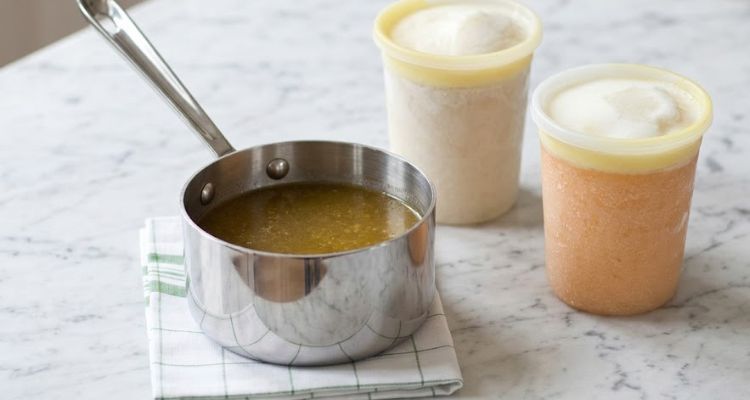
Sarra Ina Garten’s homemade chicken stock is made with 3 whole roasting chickens, onions, carrots, celery, parsnips, garlic, fresh parsley, thyme, dill, salt, and whole peppercorns, all simmered uncovered in 7 quarts of water for 4 hours. It makes 6 quarts, takes about 10 minutes of prep, and the rest is hands-off simmering. Freeze it in quart containers and you have the foundation for almost every soup and sauce in her cookbooks.
Ina says she has “to include this recipe in every book because it’s the basis for so many of my dishes,” and she means it. This exact recipe appears in at least five of her cookbooks, from Back to Basics to Go-To Dinners. She calls homemade chicken stock “one of the cornerstones of my cooking” and says the difference it makes over store-bought “is astonishing.” Her freezer always has quart containers of it alongside truffle butter, puff pastry, and vanilla ice cream.
The 2 tablespoons of kosher salt are not optional, and they go in at the start with everything else. Ina is blunt about this: “anyone who’s tried homemade chicken stock made without salt knows it can taste like dirty dishwater.” The salt doesn’t make the stock salty. It wakes up the flavors of the chicken, herbs, and vegetables so they register on your palate. Without it, 4 hours of simmering produces a liquid that smells incredible but tastes like almost nothing.
Ina Garten Homemade Chicken Stock Recipe
Course: SaucesCuisine: AmericanDifficulty: Easy, Medium6
servings10
minutes4
hours15
kcalThe one recipe Ina publishes in every single cookbook because everything else depends on it. Three whole chickens, a handful of vegetables, and 4 hours of simmering produce 6 quarts of golden stock that freezes for months. Ten minutes of work for a freezer full of the best ingredient in your kitchen.
Ingredients
-
3 (5 lb / 2.3kg) roasting chickens
-
3 large yellow onions, unpeeled and quartered
-
6 carrots, unpeeled and halved crosswise
-
4 celery stalks with leaves, cut into thirds crosswise
-
4 parsnips, unpeeled and halved crosswise (optional)
-
20 sprigs fresh flat-leaf parsley
-
15 sprigs fresh thyme
-
20 sprigs fresh dill
-
1 head garlic, unpeeled and cut in half crosswise
-
2 tablespoons kosher salt
-
2 teaspoons whole black peppercorns (not ground)
Directions
-
Load the pot: Place the chickens, onions, carrots, celery, parsnips, parsley, thyme, dill, garlic, salt, and peppercorns in a 16- to 20-quart stockpot. Add 7 quarts of water.
-
Simmer for 4 hours: Bring to a boil over high heat. Lower the heat and simmer uncovered for 4 hours, skimming off any foam that rises to the top during the first 30 minutes.
-
Strain and cool: Set aside until cool enough to handle. Strain the entire contents of the pot through a colander into a large bowl or clean pot. Discard all the solids.
- Store the stock: Pour into quart containers, leaving an inch of headspace for expansion. Refrigerate overnight. The next day, scrape off the layer of solidified fat from the top. Refrigerate for up to 5 days or freeze for up to 4 months.
FAQs
Why does Ina use whole chickens instead of just bones?
Whole roasting chickens give you both meat and bones, which creates a richer, more full-bodied stock than bones alone. The meat adds protein and gelatin to the liquid while the bones add minerals and collagen. After 4 hours, the combination produces a stock that turns slightly jiggly when cold, which is the sign of a properly made stock.
Using just a carcass or leftover bones makes a lighter, thinner stock. It works in a pinch, but Ina uses 15 pounds of whole chicken for a reason. The ratio of meat to bone to water is what gives her stock enough body to be the foundation for rich soups like her Lobster Corn Chowder and Wild Mushroom & Farro Soup.
Why simmer uncovered for the full 4 hours?
Leaving the lid off lets water evaporate slowly, which concentrates the flavor as the stock cooks. A covered pot traps all the steam and the stock stays diluted. After 4 hours uncovered, you lose about a quart of water to evaporation, which means the remaining 6 quarts are noticeably richer than they would be with the lid on.
The uncovered pot also keeps the stock at a gentle simmer rather than a rolling boil. Boiling agitates the fat and proteins and makes the stock cloudy and greasy. A gentle simmer with small bubbles just breaking the surface produces a clear, golden liquid.
Can you use store-bought stock instead?
Ina says you can, but she’s clear about the difference: “the difference it makes in the finished dish is astonishing.” Store-bought stock works as a shortcut, and Ina never shames anyone for using it. Most of her recipes call for “chicken stock, preferably homemade” which means either is fine.
If you use store-bought, Ina has recommended brands like Swanson in the past. Check the sodium content because commercial stocks vary widely. If the store-bought stock is already salted, you’ll need to reduce the salt in whatever recipe you’re making. Homemade gives you total control over the salt level.
Why does Ina leave the vegetable skins on?
The onion skins add a deep golden color to the stock that peeled onions can’t match. The carrot and parsnip skins add flavor and nutrients. Since everything gets strained out and discarded after 4 hours, there’s no reason to spend time peeling.
This also makes prep almost effortless. You quarter the onions, halve the carrots and parsnips, cut the celery in thirds, and split the garlic head. That’s 10 minutes of work, no peeler needed. Ina designed this recipe to be as hands-off as possible so you can throw everything in the pot and walk away.
How should you store and freeze chicken stock?
Chill the stock overnight in the fridge first. A layer of fat will solidify on top, which you scrape off and either discard or save for cooking. The stock underneath keeps in the fridge for up to 5 days or in the freezer for up to 4 months.
Freeze in quart containers with an inch of headspace because the liquid expands as it freezes. For smaller portions, freeze in ice cube trays and transfer the frozen cubes to a zip-lock bag. Each cube is about 2 tablespoons, which is perfect for deglazing a pan or adding a splash of stock to a sauce without thawing a full quart.
