 Sarra
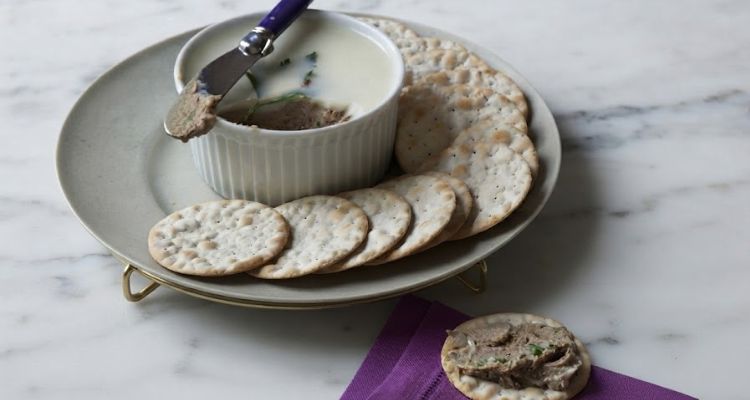
Sarra Ina Garten’s chopped liver is a traditional Jewish appetizer made with chicken livers sautéed in rendered chicken fat, browned onions deglazed with Madeira wine, hard-boiled eggs, fresh parsley, and thyme, pulsed in a food processor to a coarse, spreadable texture. It takes about 25 minutes of active cooking, makes a generous 5 cups, and is best served chilled on crackers or matzo.
This recipe comes from Ina’s Barefoot Contessa Parties! cookbook (2001) and appeared on the Barefoot Contessa show in the “Friday Night Dinner” episode. She keeps it traditional with rendered chicken fat rather than butter or oil, which gives the dish the authentic rich flavor that separates real chopped liver from a lighter pâté. The Madeira wine in the pan after the onions adds a layer of sweetness you do not get from plain browned onions alone.
The technique that makes or breaks this recipe is pulling the livers off the heat while they are still barely pink inside. Overcooked chicken livers turn dry and chalky, and no amount of schmaltz will fix a grainy texture. Ina warns not to overcook them, and she means it. Five minutes per batch over medium-high heat with one turn is all they need.
Ina Garten Chopped Liver Recipe
Course: Appetizers4
servings30
minutes40
minutes300
kcalA classic Jewish chopped liver from Ina’s Parties! cookbook, made the traditional way with schmaltz, browned onions, Madeira, and hard-boiled eggs. Pulse in the food processor for a coarse, spreadable texture and serve chilled on matzo or crackers for a holiday or Friday night dinner.
Ingredients
-
2 pounds (900g) chicken livers, drained
-
1 cup (240ml) rendered chicken fat (schmaltz)
-
2 cups (300g) medium-diced yellow onion (2 onions)
-
1/3 cup (80ml) Madeira wine
-
4 extra-large eggs, hard-boiled, peeled, and chunked
-
1/4 cup (15g) minced fresh parsley leaves
-
2 teaspoons fresh thyme leaves
-
2 teaspoons kosher salt
-
1 teaspoon freshly ground black pepper
-
Pinch cayenne pepper
-
Crackers or matzo for serving
Directions
-
Sauté the livers: Working in 2 batches, sauté the drained livers in 2 tablespoons of the chicken fat over medium-high heat, turning once, for about 5 minutes, until just barely pink inside. Do not overcook or they will be dry. Transfer to a large bowl.
-
Brown the onions: In the same pan, sauté the onions in 3 tablespoons of chicken fat over medium-high heat for about 10 minutes, until deeply browned.
-
Deglaze with Madeira: Add the Madeira to the pan and scrape up the browned bits from the bottom for about 15 seconds. Pour the onion mixture into the bowl with the livers.
-
Combine the mixture: Add the chunked eggs, parsley, thyme, salt, pepper, cayenne, and remaining chicken fat to the bowl. Toss quickly to combine.
-
Pulse to chop: Transfer half the mixture to a food processor fitted with the steel blade. Pulse 6 to 8 times until coarsely chopped but not smooth. Repeat with the remaining half.
- Chill and serve: Season to taste, transfer to a serving bowl, cover, and refrigerate for at least 1 hour. Serve chilled on crackers or matzo.
Notes
- Rendered chicken fat (schmaltz) is found at most butcher shops or in the kosher section of larger grocery stores. You can also render your own by slowly cooking chicken skin and fat trimmings over low heat until the fat melts and the skin turns crispy.
The livers should be just barely pink when you pull them from the pan. They will continue cooking from residual heat. A dry, overcooked liver is the single most common reason chopped liver turns out grainy.
Pulse the food processor only 6 to 8 times per batch. This is not a mousse. The finished texture should be coarse and spreadable with visible pieces of egg and onion throughout.
FAQs
Why does Ina use rendered chicken fat instead of butter?
Rendered chicken fat, or schmaltz, is the traditional cooking fat in Jewish chopped liver. It gives the dish a rich, savory depth that butter cannot match. Butter would also change the flavor profile entirely and is not kosher when paired with meat, which matters for a traditional Jewish recipe.
Ina uses a full cup of schmaltz, which sounds like a lot, but it serves two purposes. Part goes into the pan for sautéing the livers and onions, and the rest gets folded in at the end to bind the mixture and keep it moist. Without enough fat, the chopped liver dries out and crumbles instead of spreading smoothly.
Why is it so important to keep the livers pink inside?
Chicken livers go from tender and creamy to dry and crumbly in a very narrow window. Ina says to cook them for about 5 minutes per batch, turning once, until just barely pink inside. That slight pink center melts into the final mixture when everything gets pulsed in the food processor.
If you push past that point, the livers seize up and no amount of fat or processing brings the moisture back. The finished chopped liver will taste chalky instead of smooth and rich. When in doubt, pull them early because they continue cooking from residual heat after leaving the pan.
How is this different from Ina’s Truffled Chicken Liver Mousse?
Ina’s Truffled Chicken Liver Mousse from Make It Ahead (2014) takes a French approach. She soaks the livers in milk for two hours, sautés with Cognac, then processes until almost smooth and folds in truffle butter. The texture is silky and refined, more like a restaurant pâté.
This chopped liver is the opposite: deliberately coarse, bound with hard-boiled eggs, and finished with schmaltz instead of butter. The Madeira adds a different sweetness than the Cognac in the mousse. Both are great, but they suit completely different occasions: the mousse for an elegant dinner party, the chopped liver for a Friday night or holiday table.
Can you make chopped liver ahead of time?
Chopped liver actually benefits from time in the fridge. The flavors meld and the texture sets up nicely after chilling. Most home cooks find that 2 to 4 hours gives the best results, though overnight works too.
It keeps in an airtight container in the fridge for up to 3 days. Beyond that the onions start to turn the mixture sour. If you are building a cocktail spread days ahead, Ina’s Roasted Rosemary Cashews store at room temperature for 3 days and give you a warm, crunchy contrast alongside the cold chopped liver.
What should you serve chopped liver on?
Ina serves it on crackers or matzo, and both are traditional. Plain water crackers work well because they do not compete with the rich liver. Matzo is the classic choice for Passover or any Jewish holiday spread.
For a less traditional option, thick slices of toasted rye bread or pumpernickel give you a sturdier base with a flavor that complements the liver. Ina’s Garlic Bread works well too, since the garlic butter and the schmaltz play off each other. Round out the plate with cornichons, sliced radishes, and a smear of coarse mustard.
