 Sarra
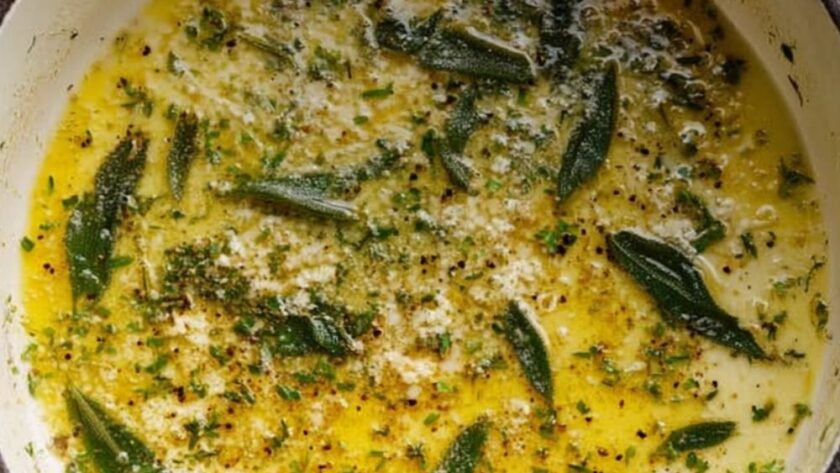
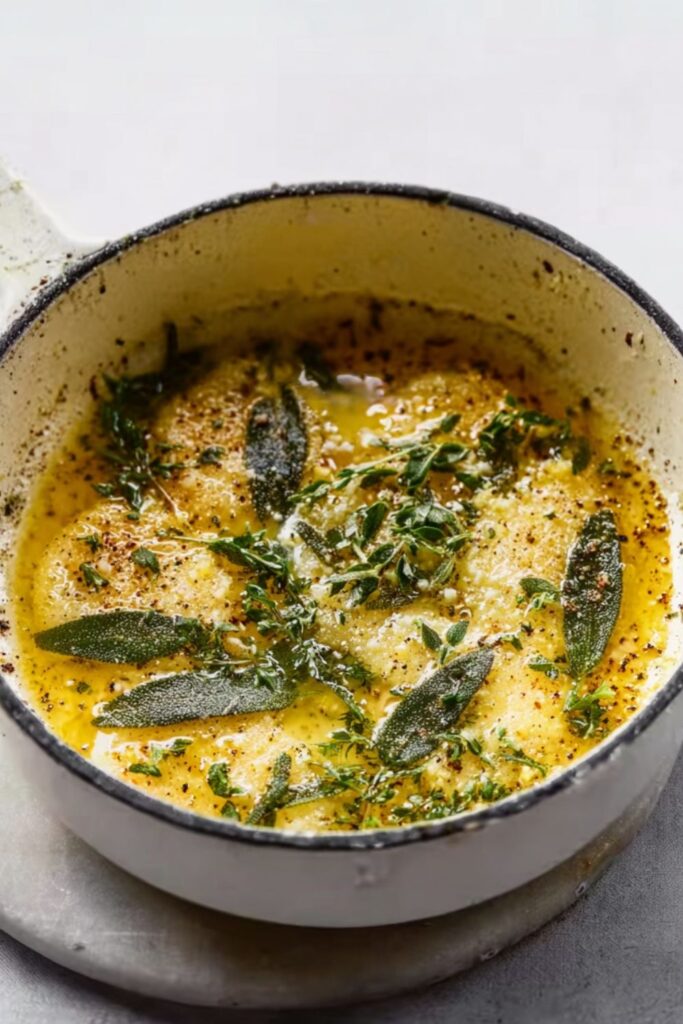
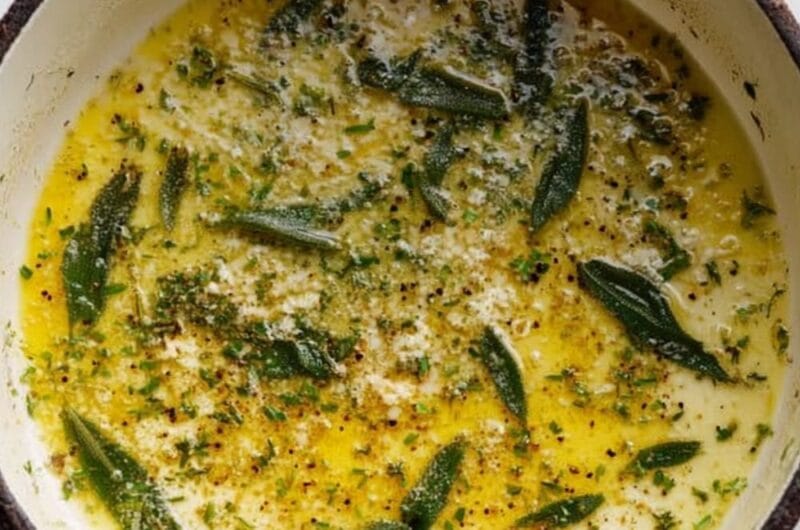
Sarra This Ina Garten Brown Butter Sage Sauce is a rich and nutty sauce, which uses fresh sage and butter. It’s a restaurant-quality finishing sauce, ready in just 12 minutes.
Jump to RecipeIna Garten Brown Butter Sage Sauce Ingredients
- 1/2 cup (1 stick) unsalted butter
- 8–10 fresh sage leaves, whole
- 1 garlic clove, minced (optional)
- Salt, to taste
- Black pepper, to taste
- 1 teaspoon lemon juice (optional)
- Parmesan cheese, for serving (optional)
How To Make Ina Garten Brown Butter Sage Sauce
- Melt the butter: Place butter in a medium skillet over medium heat. Swirl the pan occasionally as the butter melts.
- Brown the butter: Continue cooking the butter until it turns golden brown and has a nutty aroma, about 4–5 minutes. Watch closely to avoid burning.
- Add sage and garlic: Add the sage leaves to the pan and fry for 1–2 minutes until crispy. If using garlic, stir it in and cook for about 30 seconds until fragrant.
- Season the sauce: Remove from heat. Season with salt and black pepper to taste. Add lemon juice for a touch of brightness, if desired.
- Serve immediately: Drizzle over pasta, gnocchi, ravioli, or roasted vegetables. Top with grated Parmesan if desired.
Recipe Tips
-
How to avoid burning butter:
Use medium heat and swirl the pan frequently; once the butter smells nutty and turns brown, remove from heat. -
Best herbs to pair with sage:
Thyme or rosemary can be added for an extra layer of flavor. -
Can I use dried sage?
Fresh sage is preferred for texture and flavor, but dried sage can be used in a pinch—start with 1/2 teaspoon. -
How to make it dairy-free:
Use vegan butter, though flavor may vary slightly. -
Best pasta for this sauce:
Try it with gnocchi, butternut squash ravioli, or fettuccine.
What To Serve With Brown Butter Sage Sauce
This sauce shines when paired with:
- Butternut squash ravioli
- Gnocchi
- Pumpkin tortellini
- Roasted sweet potatoes
- Pan-seared chicken breasts
How To Store Brown Butter Sage Sauce
Refrigerate:
Store in an airtight container for up to 4 days. Reheat gently in a skillet before serving.
Freeze:
Freeze in a small container or ice cube tray. Thaw and reheat over low heat.
Brown Butter Sage Sauce Nutrition Facts
- Calories: ~120
- Fat: ~14g
- Saturated Fat: ~9g
- Carbohydrates: ~1g
- Protein: ~1g
- Sodium: ~60mg
Nutrition information is estimated and may vary based on ingredients and cooking methods used.
FAQs
Can I make this sauce ahead of time?
Yes, refrigerate and reheat gently before using.
Why use lemon juice in brown butter sauce?
It brightens the flavor and balances the richness of the butter.
What if my sage gets too dark?
Fry sage briefly—1 to 2 minutes is enough. If it turns dark brown, it may taste bitter.
Can I add nuts to this sauce?
Yes, toasted pine nuts or walnuts make a great addition.
Is this sauce gluten-free?
Yes, all ingredients are naturally gluten-free.
Try More Recipes:
Ina Garten Brown Butter Sage Sauce Recipe
Course: SaucesCuisine: AmericanDifficulty: Easy6
servings5
minutes7
minutes120
kcalThis rich and nutty brown butter sage sauce is quick, flavorful, and perfect for pasta, gnocchi, or roasted vegetables.
Ingredients
-
1/2 cup unsalted butter
-
8–10 fresh sage leaves
-
1 garlic clove, minced (optional)
-
Salt and pepper, to taste
-
1 tsp lemon juice (optional)
-
Grated Parmesan cheese (optional)
Directions
- Melt butter in a skillet over medium heat.
- Cook until it turns golden brown and smells nutty, 4–5 minutes.
- Add sage leaves (and garlic, if using). Cook 1–2 minutes.
- Remove from heat. Season with salt, pepper, and lemon juice.
- Serve over pasta, gnocchi, or vegetables with Parmesan.
