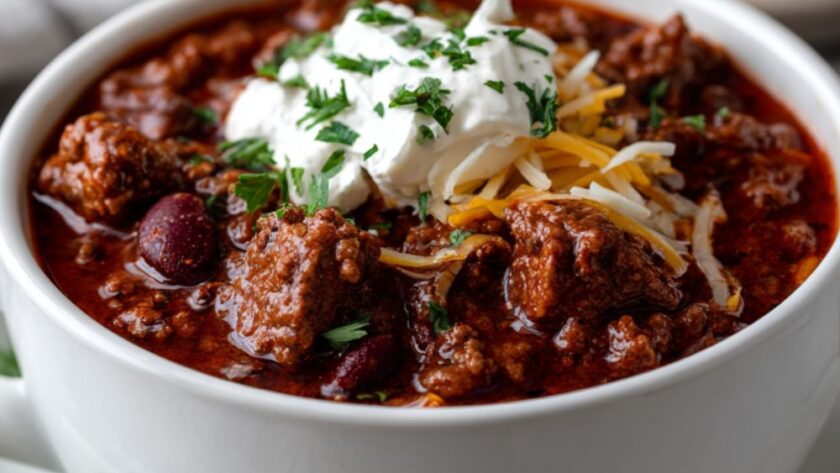
 Sarra
Sarra Ina Garten’s beef chili is a spicy, slow-simmered brisket chili with tomatoes, green peppers, kidney beans, and three kinds of heat. It uses cubed brisket instead of ground beef for tender chunks that hold up through hours of cooking. Serves 6 to 8, ready in about 3 hours 45 minutes.
This recipe comes from Ina’s friend Devon Fredericks, who owned the specialty store Loaves and Fishes. Ina featured it on the Barefoot Contessa “Tex-Mex” episode and called it proof that “a girl from New York can make good Texas chili.” Two surprise ingredients set it apart: strong coffee and fresh basil.
The make-or-break step is browning the brisket in small batches before anything else hits the pot. Ina learned from Julia Child to dry the meat well so it sears instead of steaming. Crowd the pot and you get what she calls “gray dinner.”
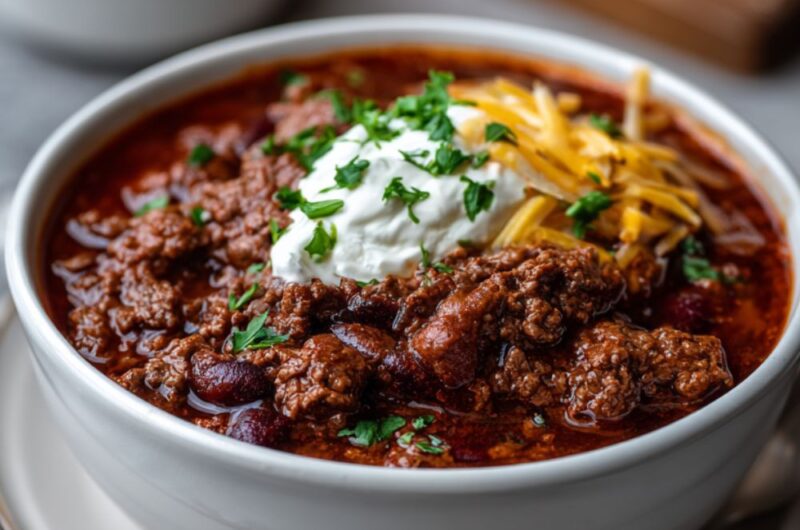
Ina Garten Beef Chili Recipe
Course: DinnerCuisine: AmericanDifficulty: Easy8
servings30
minutes3
hours45
minutes580
kcalSlow-simmered cubed beef brisket in a bold, spice-heavy tomato base, finished with an unexpected splash of coffee and fresh basil. This is the kind of chili your friends will ask you to make again.
Ingredients
- For the Chili:
-
5 lbs (2.3 kg) beef brisket, cut into 1-inch cubes
-
1/4 cup (60ml) olive oil
-
2 cups (300g) yellow onions, chopped
-
6 large garlic cloves, minced
-
2 tablespoons chili powder
-
1 tablespoon red pepper flakes, crushed
-
1 tablespoon cayenne pepper (or to taste)
-
2 tablespoons ground cumin
-
2 green peppers, seeded and diced
-
1 bay leaf
-
6 cups (1.4L) tomatoes, chopped with their liquid (or two 28 oz / 794g cans)
-
1 tablespoon kosher salt (plus more to taste)
-
1 teaspoon freshly ground black pepper
-
1/2 cup (120ml) strong brewed coffee
-
2 (15 oz / 425g) cans kidney beans, drained and rinsed
-
2 tablespoons fresh basil leaves, chopped
- For Serving:
-
Sour cream
-
Grated cheddar cheese
-
Diced fresh tomato
-
Tortilla chips
-
Guacamole
Directions
-
Dry the brisket: Pat the brisket cubes dry on all sides with paper towels. This removes surface moisture so the meat can brown properly.
-
Brown the meat in batches: Heat the olive oil in a large, heavy-bottomed pot or Dutch oven over medium-high heat. Working in small batches so the cubes aren’t touching, brown the brisket on all sides, about 3 to 4 minutes per batch. Transfer each batch to a bowl and set aside.
-
Cook the onions and garlic: In the same pot with the remaining oil, sauté the onions and garlic over medium heat until soft but not browned, about 8 to 10 minutes.
-
Toast the spices: Add the chili powder, red pepper flakes, cayenne, and cumin. Stir and cook for about 1 minute until fragrant.
-
Build the chili: Add the green peppers, bay leaf, and tomatoes with all their juices. Return the brisket and any juices to the pot. Stir in the salt and pepper, bring to a boil.
-
Simmer for 2 1/2 hours: Reduce heat to low, cover with a tight-fitting lid, and simmer for 2 1/2 hours. Stir every 30 minutes or so.
-
Add the coffee: Taste for salt. Stir in the coffee, cover, and simmer for 1 more hour.
-
Finish with beans and basil: Stir in the kidney beans and basil. Warm through for about 5 minutes. Remove the bay leaf.
- Serve: Ladle into deep bowls with sour cream, cheddar, diced tomato, tortilla chips, and guacamole on the side.
FAQs
Why does this chili use brisket instead of ground beef?
Devon calls this “New York Chili” because brisket is her cut of choice. Cubing it gives you large, tender chunks that hold their shape through 3 hours of simmering.
The long cook breaks down connective tissue into gelatin, which thickens the chili naturally. Ground beef turns mushy after that kind of time, but brisket stays distinct and fork-tender.
Ask your butcher to cut it into 1-inch cubes, or buy a whole flat and cube it yourself.
Why add coffee to this chili?
Coffee deepens the roasted flavor of the browned brisket without making the chili taste like coffee. Devon adds a half cup during the last hour, after the meat is already tender.
As Ina puts it on the show, “a splash of vinegar or coffee in a big stew makes a difference.” The bitterness cuts through the cayenne and pepper flakes so the spice stays balanced after hours on the stove.
Any strong brewed coffee works. Just skip anything flavored or sweetened.
Can you make this beef chili ahead of time?
Yes, and it honestly tastes better the next day. The flavors merge overnight and the brisket soaks up more of the spiced tomato broth as it cools.
Make the full recipe through the coffee step, cool completely, then refrigerate for up to 4 days. It freezes well for up to 3 months too.
Hold off on the kidney beans and basil until you reheat. The beans get mushy and the basil loses its punch if they sit too long.
Why does Ina add basil instead of cilantro?
When Devon adds basil at the end, Ina asks if it’s because she skipped cilantro. Devon’s answer on the show: “possibly.”
It’s not traditional, but basil adds a bright, herby lift against the heavy, spicy base. Stir it in at the very end so it stays fresh instead of cooking down to nothing.
If you prefer cilantro, swap it in the same amount. The point is a hit of something green and fresh against all that slow-cooked depth.
What should you serve with this chili?
Ina and Devon serve theirs with sour cream, grated cheddar, diced tomato, tortilla chips, and Guacamole Sour cream matters most because this chili is seriously spicy.
Set everything out in bowls and let people build their own. Corn Bread is a great side if you want something more filling.
Skip the rice. The brisket chunks are hearty enough on their own.
